
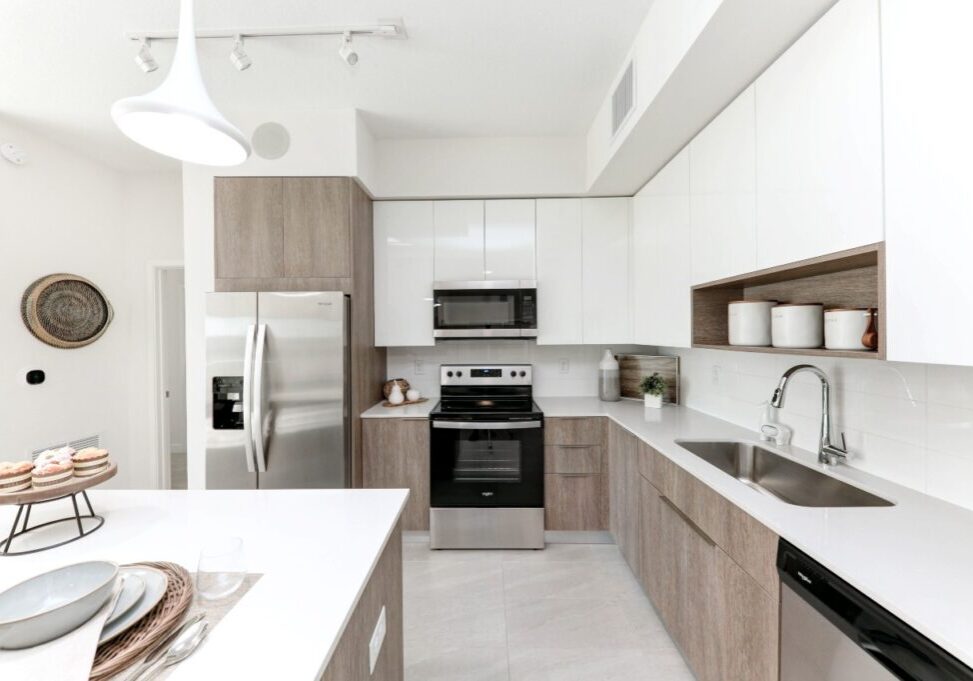
When planning a kitchen renovation, the cabinet design gets a lot of attention—but what they’re made of matters just as much. The material behind the finish affects everything from price and durability to how your cabinets respond to heat and moisture over time. Whether you’re renovating your forever home or upgrading your kitchen cabinets to add resale value, choosing the right material will make all the difference. At WOW Kitchens, we help you navigate these decisions so your kitchen is as functional as it is beautiful.
In this guide, we’ll take a closer look at the most common kitchen cabinet materials available in Canada, along with the pros and cons of each. Let’s begin with the premium options that set the tone for high-end design.
Solid Wood Cabinets – A Timeless, Natural Classic
Solid wood cabinets are made from natural hardwoods like maple, oak, cherry, or birch. They remain a top-tier choice for homeowners who want authentic texture, long-term value, and a warm, welcoming kitchen atmosphere. Every piece of wood carries a unique grain and character, offering true customization in its natural form.
Pros of Solid Wood Cabinets
- High durability – Built to last for decades with proper care
- Refinishing potential – Can be sanded, restained, or painted for a fresh look
- Visual warmth – No other material matches its organic feel and timeless appeal
- Boosts home value – A selling point for potential buyers
Cons of Solid Wood Cabinets
- Cost – One of the most expensive cabinet materials
- Moisture sensitivity – Susceptible to warping or expansion in humid environments
- Heavier weight – Requires strong hardware and expert installation
Best for: Homeowners seeking a traditional or luxury finish and planning to stay long-term.
Plywood Cabinets -The Gold Standard in Strength
Plywood cabinets are made by gluing thin wood veneers together in alternating directions, creating a material that’s both strong and stable. This engineered wood product is used in many high-quality cabinet boxes because it resists moisture better than other engineered materials.
Pros of Plywood Cabinets
- Superior strength – Holds heavy dishes and cookware with ease
- Water resistance – Performs well in humid or high-use kitchens
- Screw-holding power – Fasteners stay secure over time
- Long lifespan – Doesn’t sag or crack under weight
Cons of Plywood Cabinets
- Higher cost than MDF or particle board (though less than solid wood)
- Requires edge banding for a polished finish on exposed sides
- Inconsistent quality – Grades vary, so selecting a reputable supplier is key
Best for: Homeowners who want strength and durability without going full solid wood.
MDF (Medium-Density Fiberboard) Cabinets – Smooth, Stable, and Perfect for Paint
MDF is made from fine wood fibers combined with resin and compressed into panels. It offers a smooth surface that’s ideal for painted cabinet doors and custom designs. MDF doesn’t have natural grain, so it’s not used for stained finishes—but for clean, painted looks, it’s a standout.
Pros of MDF Cabinets
- Consistent and smooth – Perfect for modern, painted finishes
- Cost-effective – Cheaper than plywood and solid wood
- Stable surface – Won’t crack from expansion or contraction
Cons of MDF Cabinets
- Poor water resistance – Swells or breaks down with prolonged moisture exposure
- Heavy – More difficult to handle and install than plywood
- Not as strong – Especially for shelves or load-bearing areas
Best for: Homeowners seeking a sleek, painted cabinet style on a mid-range budget.
Particle Board Cabinets – Budget-Friendly and Lightweight
Particle board is made by compressing wood chips, sawdust, and resin into dense panels. It’s one of the most affordable cabinet materials and is commonly used in flat-pack or ready-to-assemble cabinet lines. While it’s not the most durable option, it can work well for homeowners on a tight budget or for temporary kitchen solutions.
Pros of Particle Board Cabinets
- Very affordable – Ideal for budget renovations or rental properties
- Lightweight – Easier to transport and install
- Widely available – Used in many off-the-shelf cabinet systems
Cons of Particle Board Cabinets
- Low durability – Can crack or crumble under heavy weight
- Moisture-sensitive – Swells and breaks down when exposed to water
- Limited screw-holding power – Hardware can loosen over time
Best for: Short-term projects or secondary kitchens (e.g., basement suites or rentals).
Thermofoil Cabinets – Low-Maintenance Style on a Budget
Thermofoil cabinets are made by applying a vinyl film over an MDF core using heat and pressure. The result is a smooth, durable surface that mimics the look of paint or wood grain at a lower price point. Thermofoil is a popular choice for homeowners who want modern styling without the cost of real wood or lacquered paint.
Pros of Thermofoil Cabinets
- Easy to clean – Just wipe with a damp cloth
- Uniform finish – No brush marks or inconsistencies
- Budget-friendly – Offers a sleek appearance for less
Cons of Thermofoil Cabinets
- Heat sensitivity – Can warp or peel when placed too close to ovens or heat sources
- Hard to repair – Once damaged, sections typically need to be replaced
- Limited lifespan – Not as long-lasting as solid wood or plywood
Best for: Homeowners who want a smooth, contemporary look at an accessible price.
Melamine Cabinets – Durable Laminate with a Clean Finish
Melamine is a plastic laminate applied to particle board or MDF. It comes in a wide range of colours and finishes—from woodgrain patterns to solid matte or glossy options. It offers a balance between affordability, style, and surface durability.
Pros of Melamine Cabinets
- Stain- and scratch-resistant – Great for busy households
- Easy to maintain – Just wipe clean with a cloth
- Modern look – Ideal for flat-panel or slab-style doors
Cons of Melamine Cabinets
- Edges can chip – Particularly if not sealed properly
- Water vulnerability – The core (often particle board) is moisture-sensitive
- Appearance – May look less premium compared to wood or high-end finishes
Best for: High-use kitchens that need durability and a sleek, low-maintenance surface.
Choosing the Right Cabinet Material for Your Needs
When narrowing down your options, start with your priorities. Is it budget? Durability? Style? Here’s how to think through the decision:
- For durability: Go with solid wood or plywood
- For affordability: MDF, melamine, or particle board offer value
- For easy cleaning: Thermofoil and melamine are the lowest-maintenance
- For modern style: MDF with a painted finish
- For long-term investment: Solid wood and high-grade plywood are top-tier
Also, think about where the cabinets will be located. Lower cabinets near sinks or dishwashers benefit from moisture-resistant options. In high-traffic homes, scratch-resistant finishes will help preserve that fresh look longer.
Bringing It All Together
The right cabinet material depends on your kitchen’s needs, your budget, and your style. Solid wood may be the top pick for luxury and longevity, while MDF and thermofoil offer great results at a more accessible price point. Plywood strikes a strong balance between strength and cost, making it a popular choice for custom cabinet interiors. Either way, kitchen cabinets are a solid investment, you can read more the ROI of kitchen cabinets on this post.
If you’re still unsure which material suits your space best, our team at WOW Kitchens is here to help. We specialize in kitchen cabinet installations across a wide range of styles and finishes, guiding homeowners from inspiration to completion with expert advice every step of the way.